
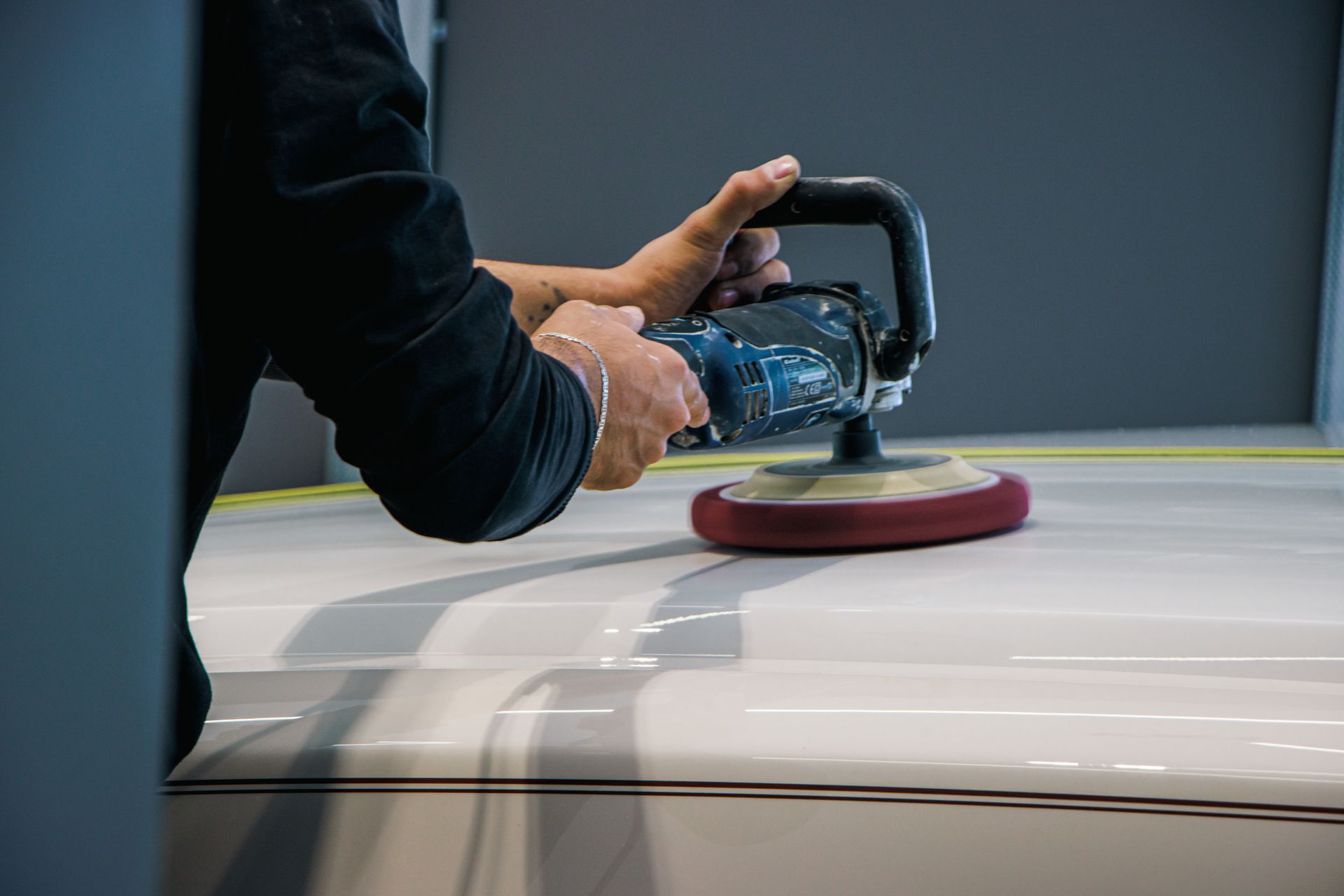
Look at dark paint under the sun or a gas station light and you will often see fine circles and scratches. Those are swirl marks, usually caused by automatic car washes and dry towels. Paint correction removes them by leveling a microscopic layer of clear coat.
One-step polish
A single machine polish that removes light swirls and haze and boosts gloss. It typically takes 4 to 6 hours on a car and suits newer vehicles or paint in decent shape.
Two-step correction
A cutting compound removes deeper defects first, then a finishing polish refines the paint to a high gloss. It takes longer, often a full day, and suits older vehicles or dark paint with heavy swirling.
Is it safe for my paint?
Done properly, yes. Clear coat thickness is checked first, and only as much is removed as needed. Some deep scratches cannot be fully removed safely, and we tell you which ones before starting.
Protect the result
Freshly corrected paint is the perfect time for a ceramic coating, which locks in the gloss and makes washing easier for years.